GRPolitics
Let the People’s Voice Stand: A High‑Assertiveness Call to Democratic Integrity in the Digital Age
| By: Professor Ojo Emmanuel Ademola, Africa’s First Professor of Cybersecurity and Information Technology Management

The Test of Power in a Digital World
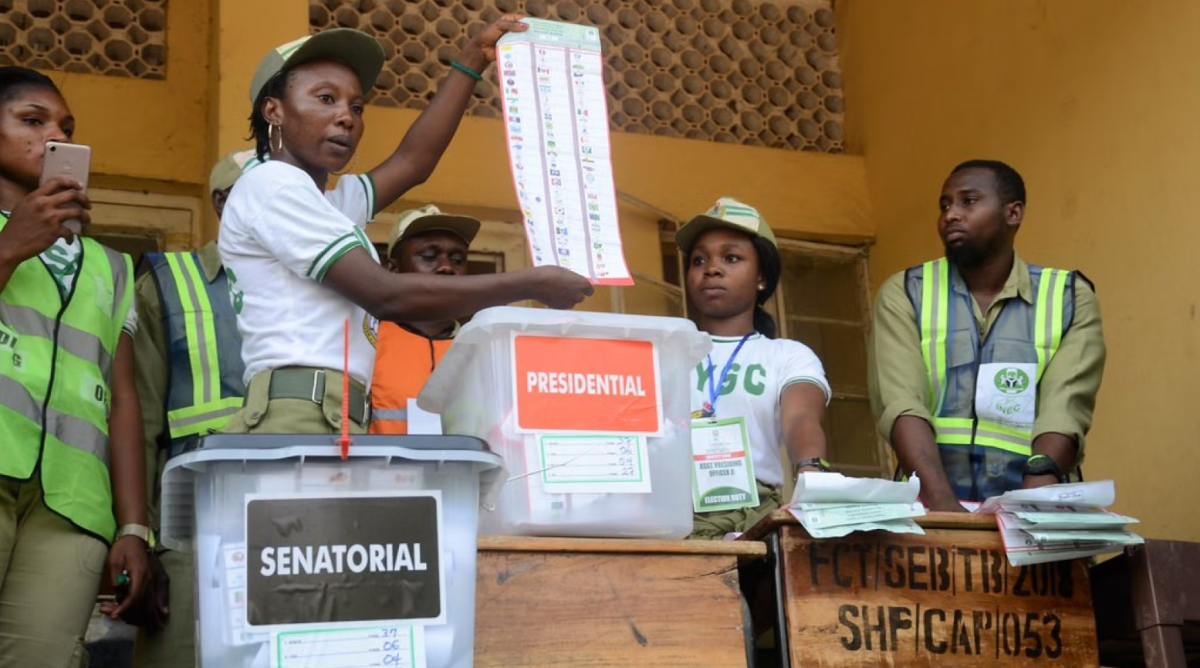
Every generation faces a defining question: will power answer to the people, or will the people be bent to power? In today’s digital age, where information travels at light speed and citizens mobilise across borders within hours, the stakes are sharper than ever.
Democracies that safeguard free and fair elections, deepen internal party democracy, and manage national resources for the public good will flourish.
Those that suppress accountability and manipulate electoral outcomes risk isolation, economic decline, and a collapse of legitimacy.
Venezuela’s recent trajectory under Nicolás Maduro, culminating in his dramatic capture amid international upheaval, stands as a stark warning.
Venezuela as a Cautionary Tale
Maduro’s years in power hollowed out Venezuela’s institutions despite the nation possessing the world’s largest proven oil reserves. Heavy crude, chronic underinvestment, politicisation of PDVSA, and entrenched corruption crippled production. Sanctions, layered atop these structural failures, intensified a humanitarian crisis marked by hyperinflation, mass migration, and widespread suffering. By 2024–2025, the country had endured severe economic contraction and the flight of millions, while political freedoms shrank under arrests, intimidation, and enforced disappearances.
The 2024 Election Flashpoint
The 2024 presidential election exposed the system’s fragility. Independent observers and opposition tallies indicated that Edmundo González won decisively, yet the regime claimed victory without releasing transparent, precinct‑level results. Research institutions documented pre‑election manipulation—disqualified candidates, revoked observation missions, and restricted witnesses—followed by post‑election repression. The lesson was unmistakable: when governments obstruct the electoral bloodstream, legitimacy collapses and instability follows.
The Shock of January 2026
January 2026 intensified the crisis. The United States launched strikes and captured Maduro, announcing its intention to “run” Venezuela until a transition. The intervention provoked global condemnation, legal disputes, and profound uncertainty. Regardless of one’s interpretation, the strategic message to other governments was clear: persistent defiance of popular will and constitutional norms invites unpredictable shocks that no sovereign state should risk.
Three Imperatives for Democratic Resilience
To ensure that the people’s voice stands—especially in the digital age—nations must fortify electoral integrity, democratise political parties from within, and govern natural resources as a public trust. These imperatives demand decisive action, supported by technology, independent oversight, and the rule of law.
Fortifying Electoral Integrity in the Digital Era
Modern elections face unprecedented threats: disinformation, deepfakes, microtargeted manipulation, foreign interference, and cyberattacks. Credible guidance now exists to counter these dangers. States must protect information integrity, empower independent electoral bodies, mandate transparency in political advertising, and secure election infrastructure. These are not enhancements; they are the minimum requirements for democratic survival in the twenty‑first century.
Assertive execution is essential. Electoral commissions, newsrooms, civil society, and digital platforms must collaborate in real‑time fact‑checking. Audiovisual political content should meet strict metadata and provenance standards. Microtargeting based on sensitive personal data must be prohibited. Election results should be published promptly in open, auditable, machine‑readable formats. Any government resisting such transparency signals an intention to manipulate, not to uphold fairness.
Strengthening Internal Party Democracy
Political parties shape candidates, policies, and national direction. When they calcify into closed networks, democracy decays even if elections appear procedurally intact. Emerging research shows that digital tools—if responsibly designed—can enhance internal party democracy by measuring viewpoint diversity, detecting marginalisation, and reducing opacity. Yet these same tools can introduce cybersecurity vulnerabilities and internal manipulation if poorly governed. The mandate is clear: use technology to open the party, not to entrench a faction.
Governments and parties must enshrine member rights to transparent primaries, publish machine‑readable records of internal votes, and subject digital balloting systems to independent audits, paper trails, and penetration tests. Oversight by civil society and academic experts should be standard practice. Leaders who fear internal competition reveal their weakness; strong movements welcome scrutiny because they trust their ideas in the open.
Governing Natural Resources as a Public Trust
National resources—especially hydrocarbons—must serve citizens’ long‑term welfare rather than regime survival. Venezuela exemplifies the resource curse: politicised control of oil undermined fiscal discipline, stifled diversification, and fuelled corruption. Resource‑rich nations must insulate operational decisions from political interference, professionalise state companies, and adopt transparent rules that prevent windfall abuse. Sovereign wealth funds with strict fiscal frameworks, independent boards, and public reporting offer proven stability.
Practical governance requires publishing all resource contracts and royalty flows, adopting sustainable fiscal rules for sovereign fund withdrawals, mandating external audits, committing to diversification targets, and protecting watchdog media and civil society. Leaders who reject these disciplines are not defending sovereignty; they are denying citizens their rightful inheritance.
The Virtuous Cycle of Trust and Accountability
When citizens trust the information ecosystem, witness transparent elections, and see resource wealth translated into public services, participation rises and extremism diminishes. Conversely, disinformation, opaque party structures, and captured extractive sectors breed disengagement, polarisation, and institutional decay. Reviews of digital democracy highlight this duality: technology can deepen participation and transparency, but without regulation and inclusion it amplifies inequality and manipulation. Policy must tame the risks to unlock the benefits.
The Consequences of Rejecting This Path
Any alternative to this reformist path inevitably corrodes the very foundations of international order. When governments choose opacity over transparency, coercion over consent, and manipulation over mandate, they do more than damage their own legitimacy—they weaken the architecture of international law itself. Norms that protect sovereignty, human rights, and peaceful coexistence depend on states demonstrating internal democratic credibility. Once a nation abandons these standards, it signals to the world that agreements can be ignored, obligations evaded, and institutions bypassed. Such behaviour does not merely strain diplomatic relations; it debases viable democracy everywhere by normalising impunity and eroding the shared rules that keep global disorder at bay.
The Choice Before Political Elites
The pressing question is whether political elites will choose courage over convenience. Some will opt for shortcuts—silencing opponents, undermining auditors, starving electoral commissions, and trading national assets for factional gain. Such tactics appear stable until they collapse. Venezuela’s 2024 and 2026 crises demonstrate that brittle authoritarianism, sustained by coercion and opacity, eventually collides with societal and geopolitical realities. Reckoning may come through protest, economic collapse, international isolation, or external intervention.
A Call for Assertive, Values‑Driven Leadership
A better path requires leaders to commit publicly to publishing precinct‑level results within twenty‑four hours of every election, inviting independent observers, guaranteeing opposition access to campaign venues and media, and criminalising the misuse of state resources for partisan advantage. These commitments form a bulwark against democratic backsliding and affirm that citizens’ voices remain the ultimate authority.
Harnessing Digital Tools for National Renewal
The digital age offers powerful instruments for renewal when governed wisely. Nations can build civic‑tech platforms that allow citizens to track budgets, procurement, and project delivery in real time. They can embed feedback loops into public services, use privacy‑preserving analytics to detect inequities, and ensure that algorithmic systems are auditable, bias‑tested, and contestable. Democracy is not a periodic ritual; it is a continuous practice of accountability.
The Urgency of Choosing the People’s Voice
The message is urgent and unmistakable: let the people’s voice stand. Strengthen internal democracy so parties serve citizens rather than themselves. Govern resources as a trust for future generations. Fortify electoral integrity with transparency that cannot be forged. Nations that act decisively will become more resilient, prosperous, and respected. Those that fail will face the fate of brittle regimes—Maduro’s included—marked by isolation, instability, and the eventual loss of control. The conscience of nations must choose now, before events choose for them.



The Nature Conservancy and FSC Africa Sign Strategic Partnership to Strengthen Sustainable Forest Management Across Africa

Payment Security Remains Biggest Barrier to Bankable Gas and Power Projects — FirstCap MD

Akin Fadeyi Foundation unveils new advocacy campaign to curb road accidents

LASG Acquires New Outboard Engines For Optimum Boat Performance

Elon Musk builds Hotel in Mars, Sets to launch soon at $5million per night – Photos

We Do Not Accept Refugee Application Directly From People – Canadian Govt.

-
 News4 days ago
‘You escape, or you die’: African men say Russia duped them into fighting in Ukraine
-
Hospitality2 days ago
The Nature Conservancy and FSC Africa Sign Strategic Partnership to Strengthen Sustainable Forest Management Across Africa
-
Transport2 days ago
Akin Fadeyi Foundation unveils new advocacy campaign to curb road accidents
-
Energy2 days ago
Payment Security Remains Biggest Barrier to Bankable Gas and Power Projects — FirstCap MD