GRTech
At AfriTech 5.0, Tizel CEO Advocates Homegrown Cybersecurity Intelligence

As Africa edges toward an estimated 750 million internet users by the end of 2025, the continent’s expanding digital footprint is increasingly matched by vulnerabilities that threaten its economic and national security.
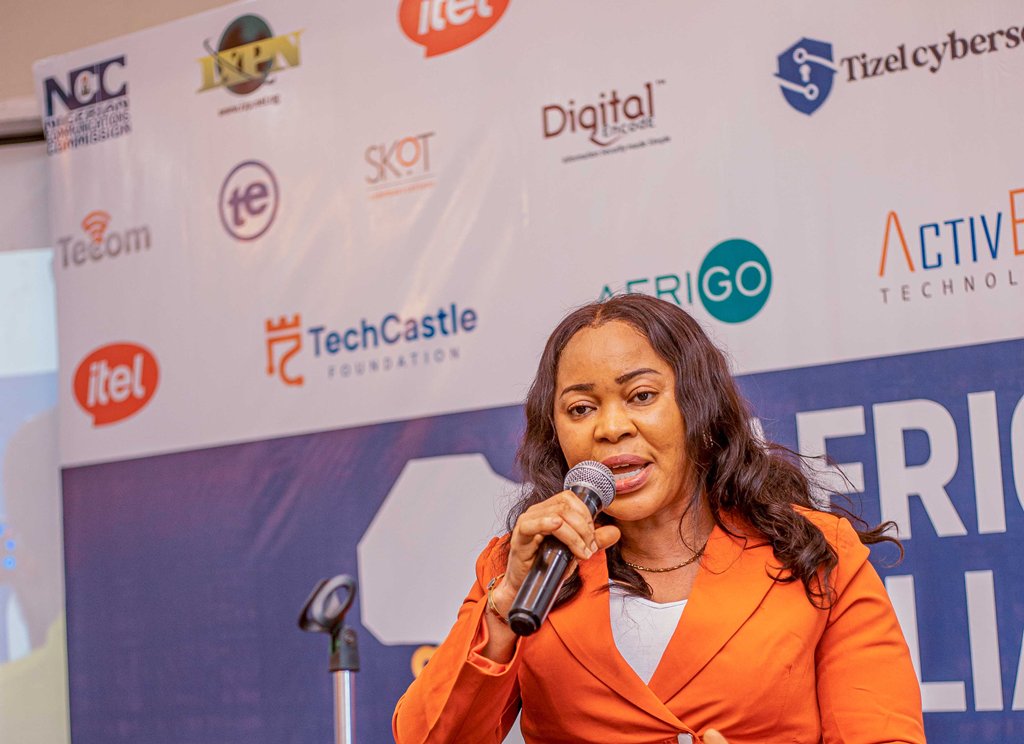
This concern took centre stage at the Africa Tech Alliance Forum (AfriTech 5.0), where Happiness Obioha, the Managing Director and Chief Executive Officer of Tizel Cybersecurity, delivered one of the event’s most compelling arguments for a new cybersecurity paradigm rooted in African intelligence rather than foreign technology.
Speaking on the theme “Beyond Firewalls: The Case for Homegrown Cybersecurity Intelligence in Africa,” Obioha maintained that Africa’s cybersecurity risks cannot be effectively mitigated with imported solutions that were never designed for the continent’s distinct digital realities.
She described Africa’s cyber landscape as one defined by unique threat actors, infrastructural limitations, cultural nuances, and business patterns that global security platforms often fail to understand.
According to her, relying solely on perimeter-based defenses such as firewalls is no longer adequate in a world where cyberattacks grow more adaptive, persistent, and sophisticated.
Obioha argued that Africa’s dependence on generic global tools has created a critical gap in the continent’s ability to detect, interpret, and respond to emerging threats, and explained that foreign cybersecurity systems frequently misread local attack patterns or fail to anticipate region-specific vulnerabilities.
As a result, many African organizations operate with a false sense of safety while facing increasingly complex threats ranging from ransomware and financial fraud to targeted breaches on government infrastructure.
The Tizel CEO emphasised that Africa’s long-term security lies in adopting intelligence-led approaches that draw from local insights, indigenous expertise, and continental research, and noted that such solutions allow faster and more precise threat detection because they are built with an understanding of local behaviour patterns and digital environments.
Beyond security improvements, she stressed that homegrown cybersecurity also strengthens national sovereignty, reduces capital flight, expands technical capacity, and creates jobs in one of the world’s fastest-growing sectors.
Obioha cited Tizel Cybersecurity as an example of what locally grounded innovation can achieve, explaining that the company’s model integrates contextual intelligence, real-time monitoring, rapid incident response, and strict adherence to regulatory frameworks.
According to her, Tizel’s work with banks, telecom operators, government agencies, and SMEs demonstrates the measurable impact of Africa-specific cybersecurity architecture.
Among the results she highlighted were the prevention of a major ransomware attack in the financial sector, a significant reduction in network downtime for a telecom operator, and the deployment of effective real-time monitoring systems for a government agency.
She reinforced that Tizel’s success is built on its deep understanding of the African digital ecosystem, a familiarity she described as indispensable for delivering cybersecurity that genuinely protects African institutions.
The region’s business culture, infrastructural diversity, and evolving digital habits, she said, can only be accurately interpreted by experts who operate within the same environment.
Obioha urged African enterprises and governments to take a more deliberate approach toward securing their digital future, and encouraged them to re-examine their cybersecurity posture, invest in indigenous intelligence-driven solutions, and build internal teams equipped to respond to emerging threats.
The survival and competitiveness of African businesses, she noted, will increasingly depend on their ability to align security strategies with the realities of the continent’s rapidly evolving digital economy.
“Africa’s digital future is promising,” she concluded, “but it must be secured with intelligence and innovation that come from within the continent.”



Dangote Refinery Ramps Up to 700,000 Barrels Per Day, Strengthening Africa’s Energy Landscape

Rising Cybersecurity Breaches in Nigeria: Digital Encode Issues Urgent Advisory on Widespread Security Weaknesses

Amokachi, Dosu Joseph, Fatai Amoo Grace Taiwo Afolabi Cup Final

LASG Acquires New Outboard Engines For Optimum Boat Performance

Elon Musk builds Hotel in Mars, Sets to launch soon at $5million per night – Photos